


Shopify Review 2015 Introduction:
There are a lot of options for running an online store – Shopify is a an all-in-one ecommerce solution that I’ve used to run several online stores since 2009 (see their pricing plans here). Here’s my Shopify review 2015 – with 6 pros and 6 cons of using Shopify for your online store.
But first, a bit of intro. There’s a lot that goes into running an online store, and your choice of platform can have just as big of an effect on your business as choosing a building or location for a physical store. It’s not the end all of the business – but it certainly can make or break your business – and can either expand your opportunity or severely kneecap your business.
Shopify is part of a group of turn-key ecommerce solutions that provides everything you need from end to end (minus the product and business know-how) to setup and start selling your product(s) to the world in contrast to you putting all the pieces together yourself (see Shopify’s plans here)
It’s sort of like hiring a general contractor to build your house, over being the contractor and hiring sub-contractors yourself. You’re still in control, but you let the general contractor use their expertise to make the project happen.
There are pros and cons to the approach – which is what we’ll get into. But basically know that Shopify competes mainly with BigCommerce and Volusion – all three of which provide turn-key ecommerce solutions, which in turn competes with non-turnkey solutions (like setting up your own store with WordPress). Make sense? Cool. Let’s dive into this Shopify review 2015
Shopify Review 2015 – Pros of Using Shopify:
Here’s what I found to be pros of using Shopify – not just in comparison to BigCommerce and other competitors, but also as an overall ecommerce solution
-
Built-in Speed & Security for Hosting

One of the challenges of running an online store is that you have dual needs from your hosting: you need it to be screaming fast and you need it to be super secure if you are processing credit cards.
For every extra tenth of a second that a customer waits for your page to load is a second that they might very well leave and go to your competition. In fact, most studies show that people will only wait up to 4 seconds for a site to load before leaving – and this gets even tighter for ecommerce sites.
On the flip side, you also need to route your customer’s credit cards through extra layers of security to remain PCI compliant and process credit cards. Many stores outsource payments to a third-party vendor (such as PayPal or Google Wallet), but even that connection can be slowed if your store isn’t set up right.
An all-in-one solution like Shopify allows you to turn that side of the business over to the pros and just let them worry about hackers, caching, compliance, and a whole range of issues that come with hosting an online store.
And that’s one thing that I found Shopify to do especially well: keep their sites screaming fast, and integrate with payment providers well so that you can always gets paid, and customers are never waiting for their page to load.
-
All The Necessary Features
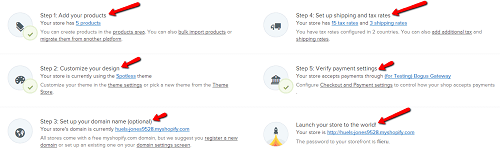
Whether you are building your own ecommerce solution or shopping for an all-in-one solution, getting all the pieces of an online store together can actually be a bit challenging.
Sure, you can strip the bare bones down to having a product up to buy, and allowing someone to pay and give you their information – but to do it right – you’re going to want other features on top.
You’re going to want integrated payments; you ‘re going to want an easy way to add and remove products; you’re going to want to be able to customize the look of your store; and you’re definitely going to want to have solid, easy to implement Analytics to track everything (something that Volusion makes it tough to implement).
Whenever I have run stores for clients or myself in the past, Shopify had everything I needed to run an amazing online store – without being nickel and dimed in upgrades or left out to dry without a key feature.
-
Great Customer Support
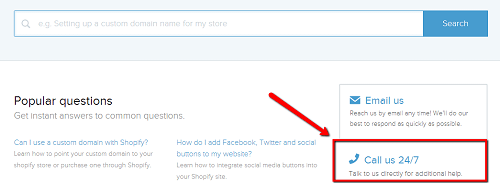
When I contrast my experiences between building an ecommerce store myself (with something like WordPress + WooCommerce) and running it with something like Shopify – customer support is one of my top reasons to go with something like Shopify.
When you are building it and running it yourself – you have no one to turn to, except $$$ developers and often unresponsive online forums. With Shopify – you get answers..fast. And all my customer support experiences with Shopify have been really fast, correct, and helpful – from both a developer and store owner perspective.
They have a huge database of FAQs, email/chat support…and phone support – with a real, knowledgeable rep on the other side.
When you are focused on running your online store – this safety net of always having someone at your back with answers is basically worth the Shopify subscription price alone. And on this point Shopify especially shines.
-
Marketing

What good is an online store if you can’t get anyone to show up? That’s what marketing is for – and is something that Shopify really excels at. Shopify doesn’t offer the fanciest marketing tools on the planet (as part of the main package – they offer more in the App Marketplace) – but they do include the essentials – and they make sure they do the essentials really well.
For marketing campaigns (such as email, AdWords, etc), Shopify allows you to quickly and easily create landing pages, which is a key differentiating factor between other all-in-one platforms (and some DIY platforms).
And for SEO – Shopify creates 100% crawlable, clean code. They allows custom Title tags, and meta descriptions (see screenshot) – even on collections, in addition to other essentials like Webmaster Tools, sitemaps, and the prevention of the perennial ecommerce bug bear…duplicate content (for my SEO geeks, they use canonicals)
If you’re looking for an all-in-one platform that does good marketing for SEO, AdWords, and anything else up your sleeve – Shopify is a great choice in my experience.
-
Design
I think that good web platforms should always offer at least 3 levels of customization: first, it should look fine out of the box; second, it should be easily improvable without having to employ and professional graphic designer or developer.
WordPress is a good example for this – it looks great out of the box; it has tons of custom themes that you can buy and apply; but it also has the ability to be wielded by a professional designer to create a really high-end website.
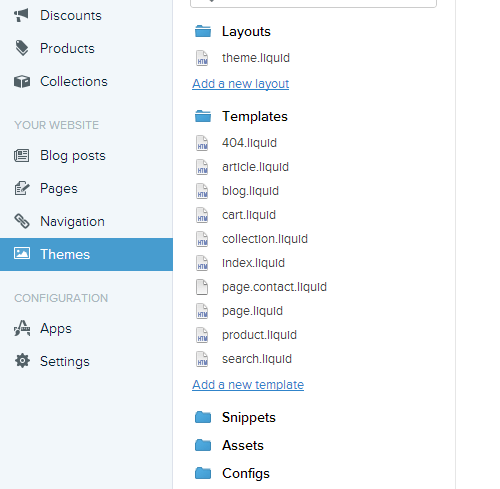
Shopify has this ability as well, and I give a huge pro to Shopify for that. Shopify runs off a theme system. It has free themes bundled out of the box to choose from, and a wide variety of custom-built themes to purchase through their marketplace. In addition, as you can see in the screenshot above, Shopify makes its theme system available so that a designer or developer can customize it and create any type of shop you want – whether you are a tiny niche boutique or a multi-million dollar enterprise.
If you are just starting, you can make do just fine with a free theme and upgrade as you can justify/need it.
-
Add-Ons (Shopify App Store)
Shopify comes with a ton of features built-in, but no platform can possibly accommodate all the features needed by storeowners – so Shopify took a page from Facebook, Apple, Android, and started an App Store.
Shopify provides the platform and all the core features, and allows developers to offer hyper-specialized products that plugin seamlessly to Shopify’s platform.
Some are paid and some are free. The Chimpified App is my favorite example though. Not all retailers need or do email marketing, but some love it. It’s not a core feature of Shopify – but MailChimp (an awesome email marketing company) built an App that integrates MailChimp seamlessly with Shopify. It’s free, and awesome.
With this set up – you don’t have to worry about finding a developer every time you want a certain feature, because it’s probably in the App Store…and will be a lot cheaper and will work exactly as advertised.
Not all platforms have the scale to pull this off correctly, but Shopify does – and they have a business development team that specifically works on developing new apps and bringing new developers to solve problems. The App Store is a huge pro for me with Shopify.
Shopify Review 2015 – Cons of Using Shopify
Not every platform is perfect though, and a Shopify review 2015 wouldn’t be complete without covering the cons of using Shopify for an online store. Let’s dive into the 6 cons of using Shopify for ecommerce.
-
Shopify Pricing
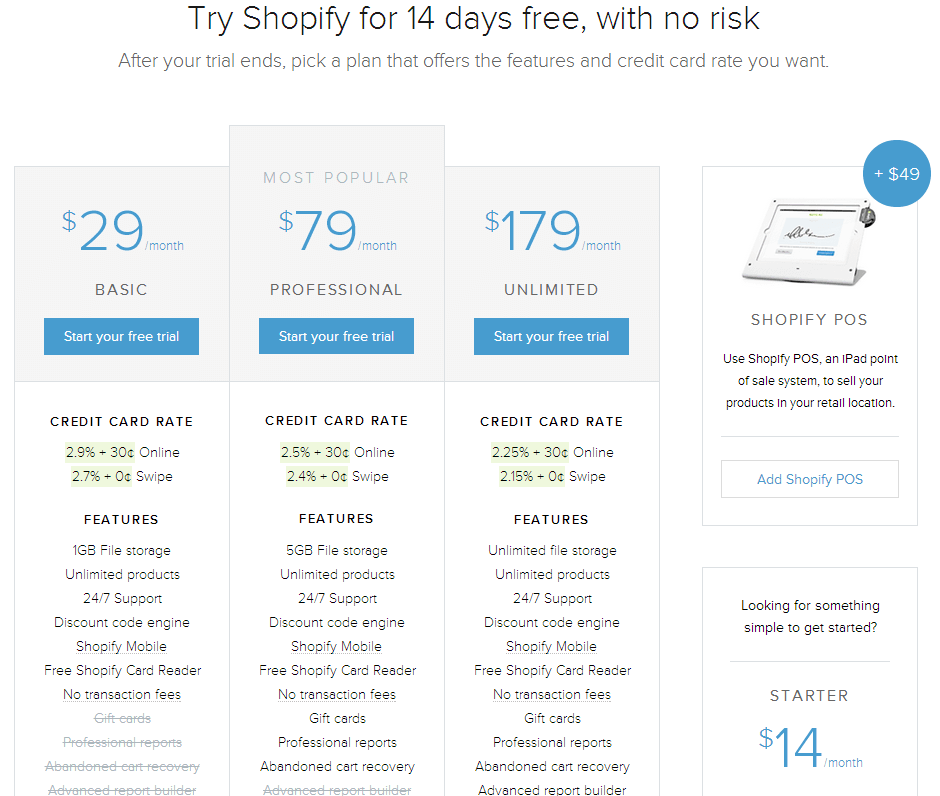
If you have a small online store – Shopify is going to be more expensive than BigCommerce at the beginning, and get more affordable as you grow. The kicker isn’t the $5 difference – it’s the transaction fees that Shopify charges (which are on top of any credit card feed). They justify it by pointing out that they go away as you grow – but it still represents a bit of a barrier to entry for Shopify.
They ameliorate some of the pricing by offering the “Get Started” option at $14/mo – but to me the transaction fees come off as a con of using Shopify, especially since you may not be sure about your sales volume or profitability at the start.
If you want a small online store – and plan on staying small, then you might want to also check out BigCommerce (just don’t go with Volusion because of their Analytics issues). But otherwise, it’s not a deal breaker for most online store owners – but is a con to be aware of and plan for.
In 2015, Shopify has restructured their pricing in line with new industry business models. To put their pricing in context and help you decide between competitors (like Bigcommerce – review here or Volusion – review here), here’s a rundown of 4 elements of pricing you should consider.
First, your monthly price – the sticker price you pay every month for a certain level of features. Shopify’s plans start with the Starter Plan at $14 USD per month and go up from there, for example.
Second, your platform transaction fees – the additional fee you pay to a platform as a percent of sales. Shopify used to charge these on all their plans, but no longer does. You should pay attention to these when cross-comparing.
Third, your credit card fees – these used to be pretty standardized – and for the most part still are. However, Shopify recently set up their own POS & processing network so you don’t have to go through a 3rd party processor. That means fees go to Shopify rather than a processor like PayPal or Authorize.net. It can be confusing, and there are some lock-in issues to consider with Shopify. But be sure your are comparing apples to apples.
Fourth, your add-on fees – these are 3rd party apps, plugins or bits of software that you can purchase to make your store better. Usually these are one-time purchases, but sometimes they run off transaction fees. Shopify has a huge app store. Many are free, but some are paid. Be sure to budget for these when planning your store.
Pricing is “con with caveat” for Shopify. The built in credit cards & no transaction fees are huge, but monthly price & add-on fees can add up. Basically, Shopify is slightly pricier than Volusion & slightly cheaper than Bigcommerce as a general rule (but again, everything depends on your payments, apps, etc). The price differences are close enough that you should be comparing based on features & service.
Shopify, like all hosted platforms, is going to be consistently more expensive month to month than a self-hosted store you run yourself. However, self-hosted stores (like WordPress + WooCommerce) tend to have really $$$ development needs occasionally – especially if you’re running a bigger setup. If you have some technical know how and a smaller shop, Shopify pricing will be expensive. If you want to focus on running & marketing your store (and prefer known monthly costs), then Shopify’s pricing will actually be a pro.
-
Hacking around customization
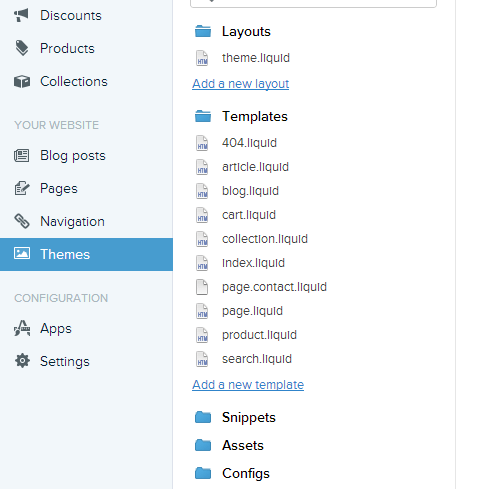
I made the point earlier that a pro of Shopify is that it looks good out of the box, has great custom themes available, and has the ability to be fully customized by a developer/designer.
Now to the con of their customization setup – they use a unique setup to customize their themes versus using something like PHP for their templates. It’s a huge plus in some ways, but for someone who loves to tweak things without doing a full-on customization, it can be annoying.
I’m used to tweaking WordPress templates because they are in PHP – which is a common language and tons of forums and support, while the Shopify Liquid setup is a bit foreign to me and any other first-timers.
It is fairly straightforward to pick up, and they do offer amazing support in the Shopify forums, but I still consider it a bit of a con to have to become familiar with Liquid to tweak my store’s theme.
-
Content Marketing
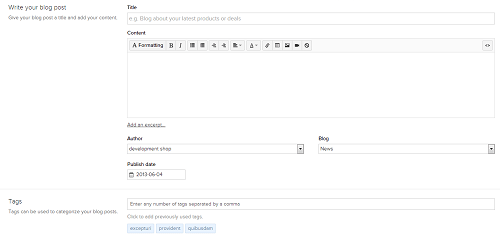
Content marketing is a huge marketing medium for ecommerce. You can boost you organic traffic, increase social shares, grow your brand, and educate your customers. To me, blogging software is a must for an online store.
Shopify comes with built-in blogging software…but it’s not the greatest – especially if you are spoiled for WordPress. It gets the job done, and it’s better than it’s competitor’s options, but is definitely something I’d love to see improved upon.
-
Shopify Jargon
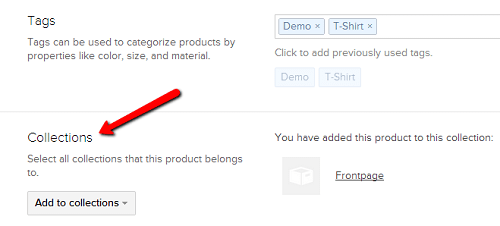
Every ecommerce platform is going to have a learning curve, but I found that Shopify has a slightly steeper curve just because the jargon the use is slightly off. Whether it’s their Liquid theme setup, using “collections” over “categories”, or various other small edits – I find their store setup to be not exactly how I’d set things up.
It’s not a huge con – but other solutions like BigCommerce are a bit more straightforward with their “user experience.” This con is much improved though with the release of Shopify 2 (as seen in the initial setup video below) – but is still there.
-
Lock-in
Lock-in is something I had to include in my Shopify review, even though it is a con for all-in-one ecommerce in general. Here’s the deal – if you ever decide to move your store to a different platform – it’s not going to be smooth. This makes choosing an ecommerce platform especially tricky because you have to plan for the future – and not just consider costs right now.
In my opinion, Shopify is an amazing platform to grow with. They have the scale, features, support, and pricing to cover you whether you are a brand new 1 product shop – or if you want to be the next Amazon.
However, if you were to ever want to leave, the best you could get would be a CSV export of your product information. Everything else – gone. It’s the same with BigCommerce and Volusion, but it’s still a con to consider when looking for an online store platform.
- Initial setup
The last con of using Shopify for your online store is their initial setup process. With the release of Shopify 2 – Shopify has definitely made initial setup of your online store much easier – but it still isn’t a “just add water” step by step. It’s easy in a sense, but I think they oversell it a bit. It requires a little bit of technical know-how (especially to get your domain name redirecting correctly).
For anyone who buys into Shopify expecting to be making money in 15 minutes is going to be disappointed. The reason is takes a bit longer, and requires a bit of technical knowledge is that Shopify does do it right, and doesn’t allow you to cut corners – and they don’t make real decisions for you. However – to round up the last con – here’s a video tour of the Shopify backend so that you can see for yourself.
Shopify Review 2015: Conclusion
If you are looking for an all-in-one ecommerce solution for your online store, and you are looking to grow and add products – and you have a little bit of technical know-how, then Shopify will be a great fit for you.
You should check out Shopify (see their plans here).
If you are looking for something a little bit cheaper, and a little bit easier to setup – then I would also consider BigCommerce (see their plans here & see my Bigcommerce review here), but would definitely keep Shopify in the the running.
If you have any comments, questions, or experiences – let me know in the comments!
Check some Shopify Coupon Codes to save your money when purchasing Shopify